

Our Story
Our Story… A Two Man Show
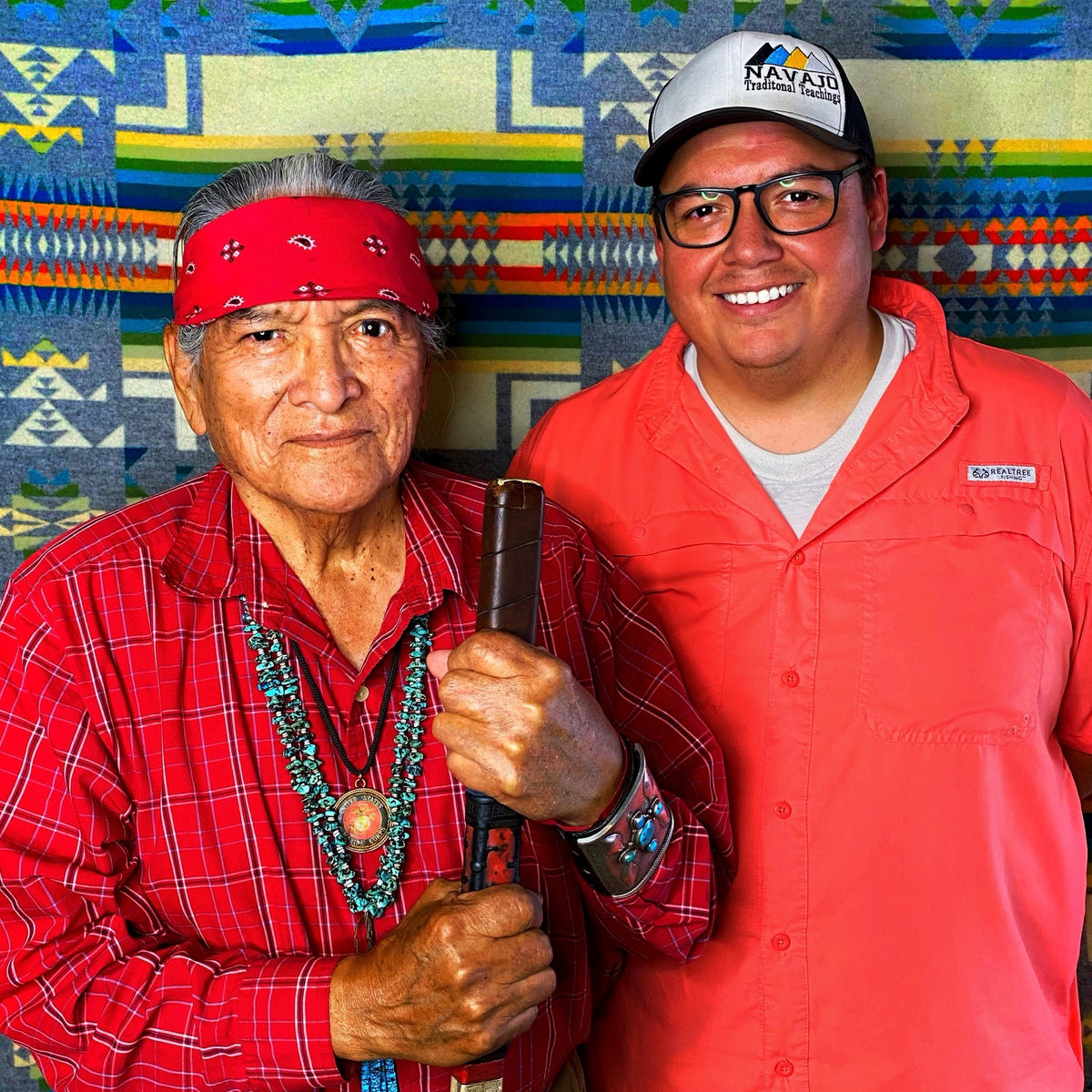
My Name is Shane Brown, I am half Navajo (Diné)
You have come to the right place if you are looking to connect to culture whether you are full, part or just have an affinity…
We started Navajo Traditional Teachings by accident one fine day…
It was just before the 2017 total eclipse…
I said “Dad what are the traditional beliefs about the eclipse?”
I recorded the video in my living room, started a facebook page and uploaded it…
It went VIRAL in a matter of hours we had tens of thousands of views…
The next day I saw that we had passed into the hundreds of thousands of views.
It was then that I realized there was a need…
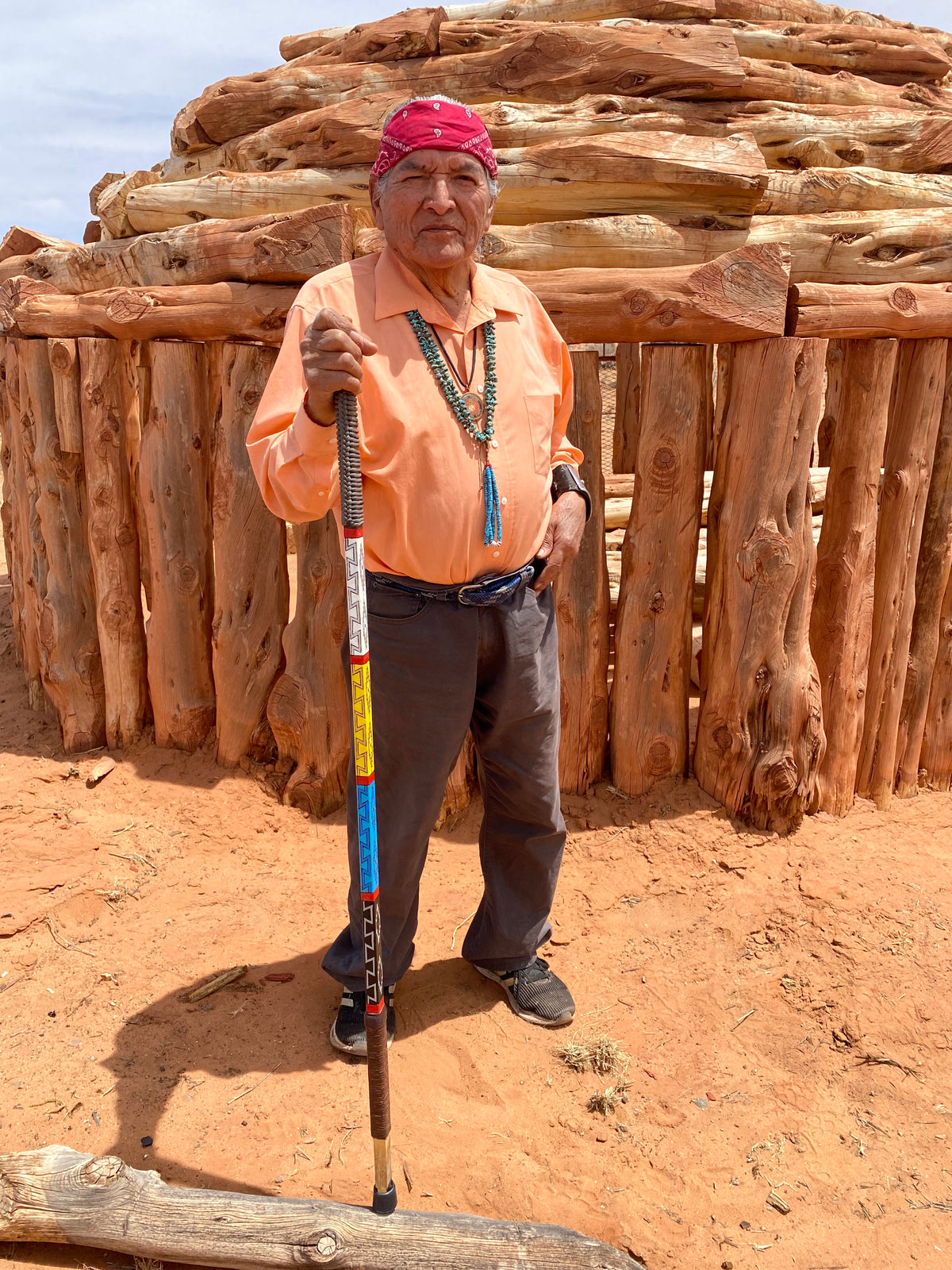
My Dad, Wally…
He knew there was a need many years before.
When he was a young boy he was taught and encouraged to learn the traditional ways…
Trained as a medicine man early on by his grandfather…
Wally says quite frequently when we are discussing times with his grandfather (Hastii Silao ha di jaa ii) “He was blind, and he must have thought I was older than I was…
Because of the things he told me”.
Wally learned in the sweat lodge many times just him and his grandfathers…
The sweat lodge is called the “Place of the grandfathers”...
It is where those who have gone to the next place are invited to come back and help their kindred that still walk the earth…
In the sweat lodge Wally learned things that the younger Diné do not know…
Some of the older ones do not know…
But Why?
Why do so many Diné not know their culture?
Starting in the 1940’s Diné children were taken from home and put into boarding school…
Their parents thought this would help them to succeed in a new world…
An Anglo world…
These boarding schools thought the best course of action was to remove the indian…
Some said “kill the indian, save the man”...
With 20/20 vision we can see this was without doubt the wrong approach.
Children were punished for speaking their language…
Their hair was cut short…
Even the girls had their hair cut short…
Taught that the traditional ways were bad…
Taught that the traditional ways were best forgotten…
And too many of those precious children believed it…
When they grew up they did not pass on the traditional ways to their children…
Remembering how much trouble they had gotten into for practicing the traditions.
In almost 1 generation an entire culture has nearly been wiped out…
Some other tribes are gone…
They did not fare so well.
We count ourselves fortunate and blessed by the Holy People...
That we have been able to retain part of our culture.
But the loss continues today…
Culture is not being taught as it was meant…
From the old ones.
Instead anthropologists (perhaps well meaning) fill the books with untruths and speculation…
Younger Diné have no reliable source for the true teachings.
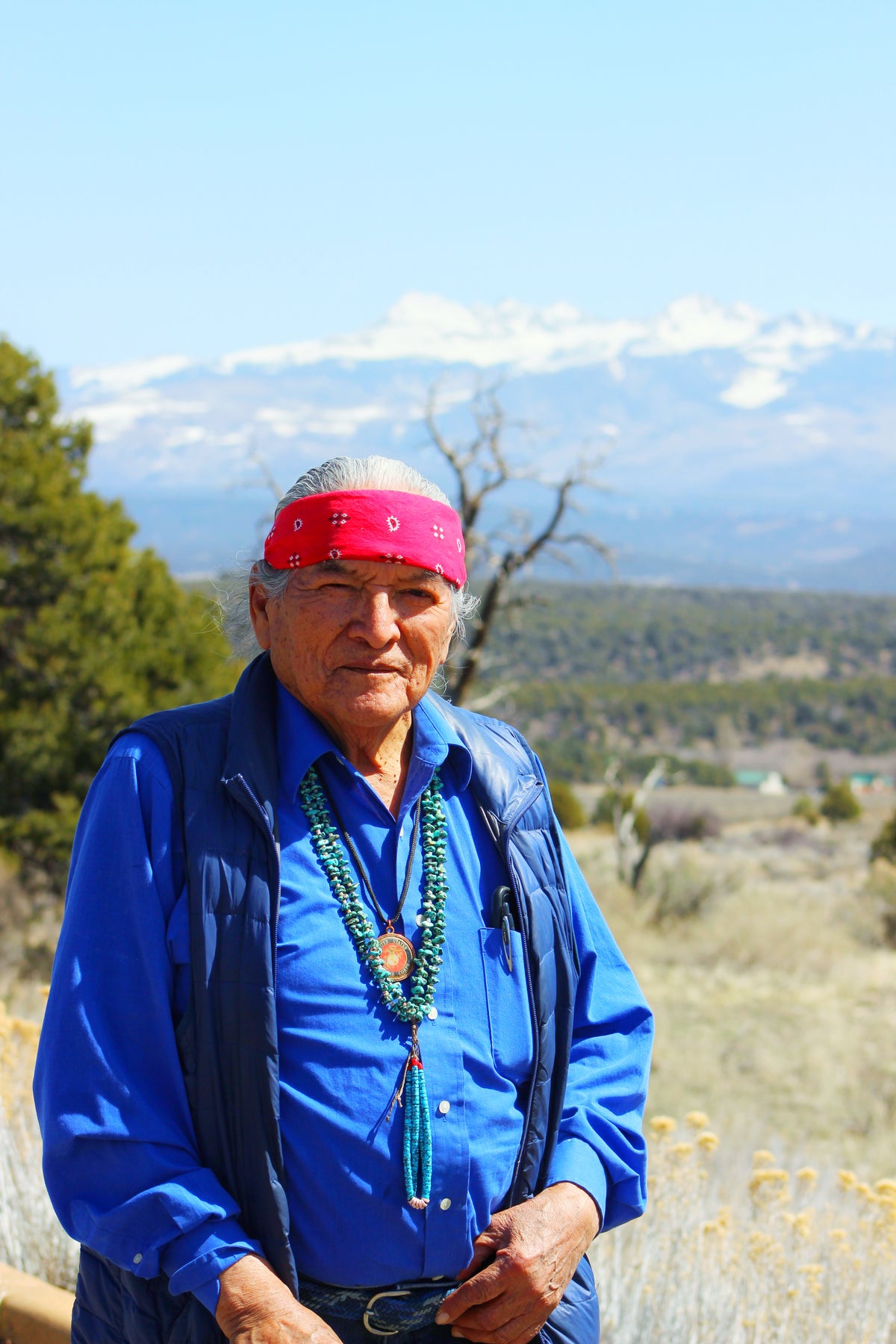
This is our call!
Wally has been teaching culture for the better part of his life…
A silversmith by trade…
Constructing jewelry in the traditional way…
Male and female… patterns of four… Turquoise and Silver.
Wally’s work has always told the stories of Diné.
Always trying to reach more people and get more information out there…
Wally tried to teach culture on National Park Service (NPS) Land (formerly Diné Land)...
The NPS Shut down these attempts…
Wally and a group of supporters became activists in a sense…
And took over a popular tourist destination…
This destination is sacred to the Diné and only under special circumstances would one visit and walk under this Rainbow Bridge…
For three days the site was closed for a Diné cleansing ceremony…
This enraged the National Park Service and those given the concession to operate business on the National Park Service Land.
You can't keep a good cause down.
Although the National Park Service would not let Wally teach Diné Culture on NPS Land…
Wally and supporters began looking for other venues to share the beautiful Diné Culture and way of life…
This gave birth to a cultural center in Northern Arizona…
People came from all over the world to learn Diné Culture…
The cultural center was a success…
Not that it made lots of money (It didn’t) but it was successful…
In the sense that pure Diné culture was being shared…
As a young teenager I was constantly spending time at the cultural center…
At first begrudgingly because it was work.
Eventually I started to listen to what was being shared and taught.
I could see day after day people walking away feeling enlightened…
I learned the stories and the teachings…
Not all of them…
You see, I am that generation that wasn’t taught Diné bizaad (Navajo Language)...
So many of the teachings require an advanced command of the language…
Something I do not have…
I learned there are many mixed blood natives like me…
In fact there are more mixed blood than full blood…
In the mixed blood world it seems like you only fit with other mixed bloods…
Those with mixed blood also feel the need to connect…
But often they are unable to connect because they are not full blood…
This isn’t an attempt on my part to garner sympathy…
Just bringing to light my experience hoping others can do the same…
I also learned there is a group of people who merely have an affinity towards traditional Beliefs and practices…
I heard someone say once, “It is because every culture at one point had a tribal system, people want to feel that… Natives are the ones on the earth who lived that way most recently”.
This makes sense to me…
Afterall I do encounter many people without an ounce of Native blood but they want to be a part of it so much…
They are compelled to seek it out…
Their lives are enriched by the traditional teachings…
They are able to strengthen their relationship with their deity.
In the end…
If you ask me…
All the things I have learned about my culture and continue to learn…
It is all about the realization that the creator is there…
Waiting for communication…
Willing to help…
Waiting for the Five-Fingered being to embrace their true identity…
As a child of the Holy People.
So that is what we do…
We tell our stories…
We seek out other elders following the traditional rule of consent among 2 or more elders…
We enlist all that we can…
To be part of this mission…
The mission that other tribes never had the opportunity to attempt...
I invite all…
Full blood, part blood and no blood…
Come and learn…
Come and feel…
Take what we have and add it to what you have.
Enjoy the free videos, let them uplift and enrich your life…
Make a purchase and help share the traditional stories…
Become a Producer and get more teachings…
But also help us keep this going for as long as we can.
This invitation is to all…
We welcome you with open arms and glady share our culture.

Authentic Turquoise
Why Wear Silver & Turquoise
How We Test Our Turquoise

4 Ways To Know if Turquoise is Real or Fake
Testing is a skill. Some pieces of turquoise you can tell right when you pick them up. Others require a more scientific approach.
Keep Reading To See The Four Ways To Test Turquoise:

1) Visual Test
This is the first and easiest way to test turquoise.
It may look “real,” and sometimes the fake stuff looks just as good as the real thing. When looking at real turquoise, the color can be more uniform, like Sleeping Beauty turquoise, or it can have more tones, like green Kingman turquoise.
The thing to look for is how the color changes. In real turquoise, the color change happens abruptly. It almost seems blotchy. It isn’t a smooth transition from one shade to the next.
You also want to look for color tone. The color should be similar. If you have a blue stone on one side and white on the other, this may indicate fake turquoise, or further testing is needed.
The matrix is the vein or other material visible in the turquoise. Some turquoise has a deeply defined matrix, while some has hardly any. It is rare to find turquoise with little to no matrix, which is why those stones are considered more valuable.
Matrix can be black, grey, or different shades of brown. Matrix will also vary in intensity. If the matrix looks too uniform or if the patterns of the matrix repeat, that may be a sign the turquoise is fake.
Failing any of these tests doesn’t automatically mean the stone is fake.

2) Acetone Test
This test uses the powerful chemicals in acetone or paint thinner. This test may be the fastest way to tell, but you probably won’t be able to do this test if you are browsing a piece in a shop.
Just like paint, dyed turquoise will show its true color when introduced to paint thinner.
Some say you can tell with acetone fingernail polish remover, but in some cases, those chemicals are not strong enough to break down the dye.
Using paint thinner, apply some to an inconspicuous spot on the turquoise in question with a cotton swab or cotton ball.
Then, rub vigorously. If the turquoise is dyed, the cotton will show a tint of blue or green. Be careful, as this may ruin the piece if it is indeed fake turquoise.
That’s why you should do it in an inconspicuous area if you do it at all.
Dyed howlite and magnesite are favorites of imposters, and this test will reveal their true colors. These stones are naturally white but have a similar matrix to turquoise. The white dyes easily, and the matrix gets darker. A dark matrix is a good indicator of dyed stone but isn’t always accurate.

3) Heat Test
Some fake turquoise is plastic. It will pass the acetone test in many cases. It can also feel and look real. There is a turquoise called “block” or “composite.” This is made from turquoise scraps that are ground down and pressed together. Although chemically it is technically turquoise, it doesn’t feel like turquoise and can easily be mistaken for plastic.
To test with heat, a lighter and a heavy-gauge safety pin will be needed. Find an inconspicuous area of the stone in question. Heat the safety pin until it’s red hot. This shouldn’t take long.
Take care not to overheat, as the heat will travel through the safety pin and burn your fingers.
Once the tip of the safety pin is red hot, apply it to the inconspicuous area. If the turquoise is plastic, you will see the plastic melt and a pinhole start to form. Real turquoise doesn’t melt.

4) Stress/Scratch Test
Real turquoise is brittle, which is why the standard for turquoise is high-quality stabilized turquoise. Dyed howlite and magnesite will be white under the surface.
The problem with this method is that all the stones will scratch.
So, if you are performing this test, find an inconspicuous area to test. Basically, what you’re looking for is whether the turquoise is white below the surface. You shouldn’t have to scratch too deeply before you see white.
But the piece will be permanently damaged.
If you can’t tell and, say, you are testing an entire bag of turquoise beads, you can get a hammer and smash one completely. Real turquoise will have the color all the way through. Dyed howlite and magnesite will be white.